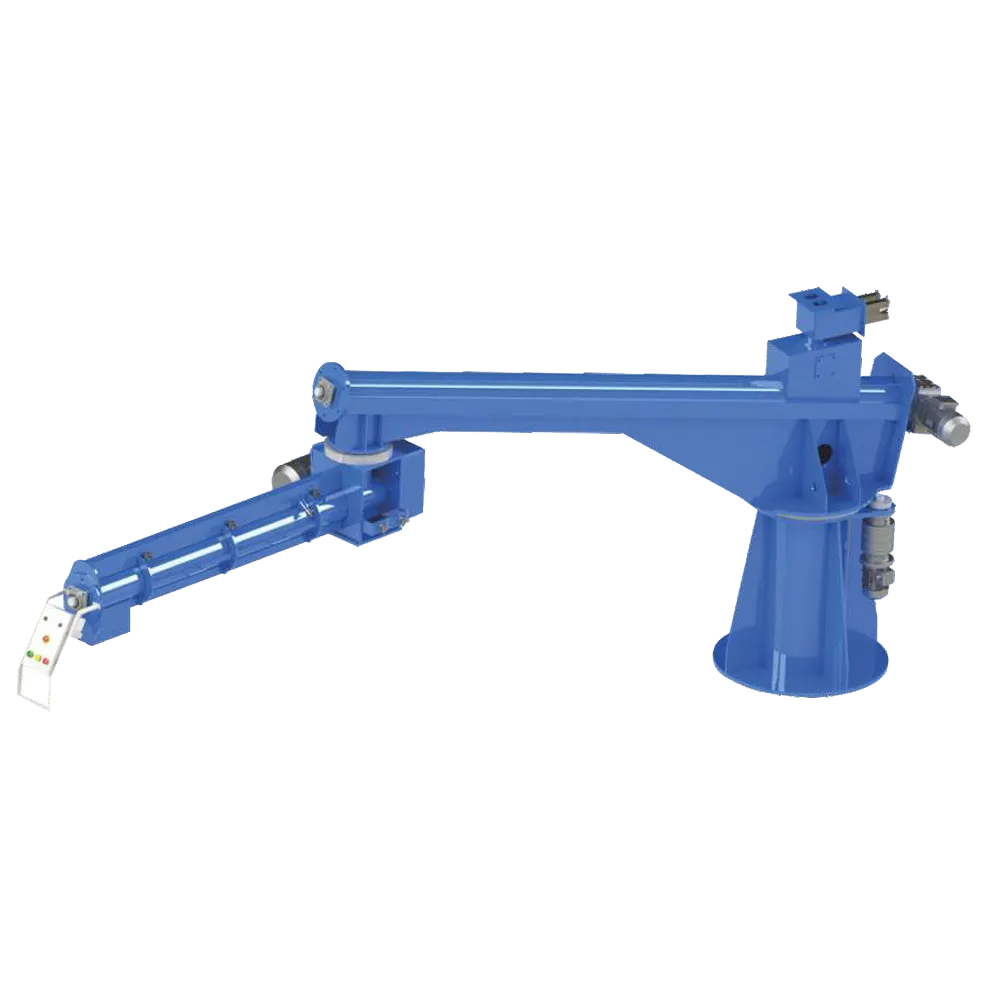
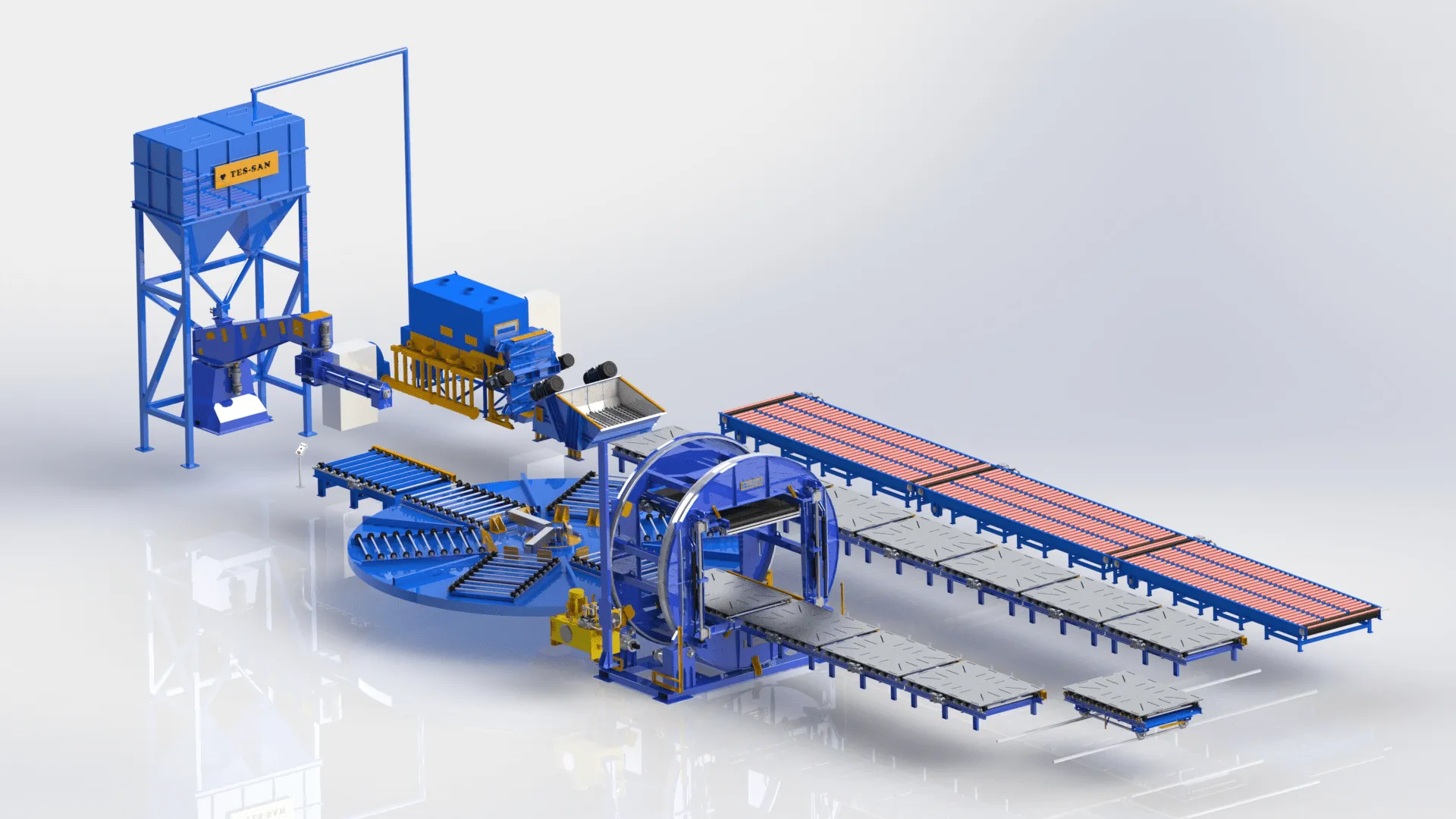
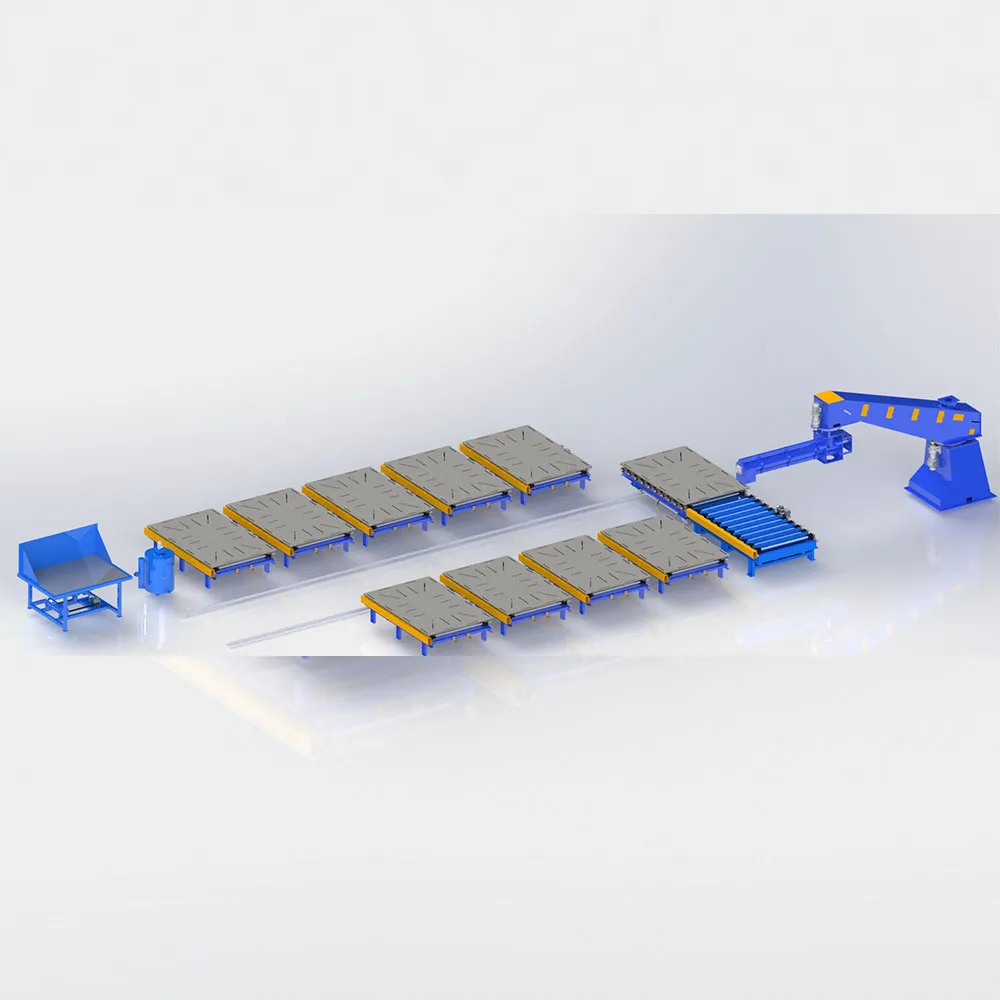
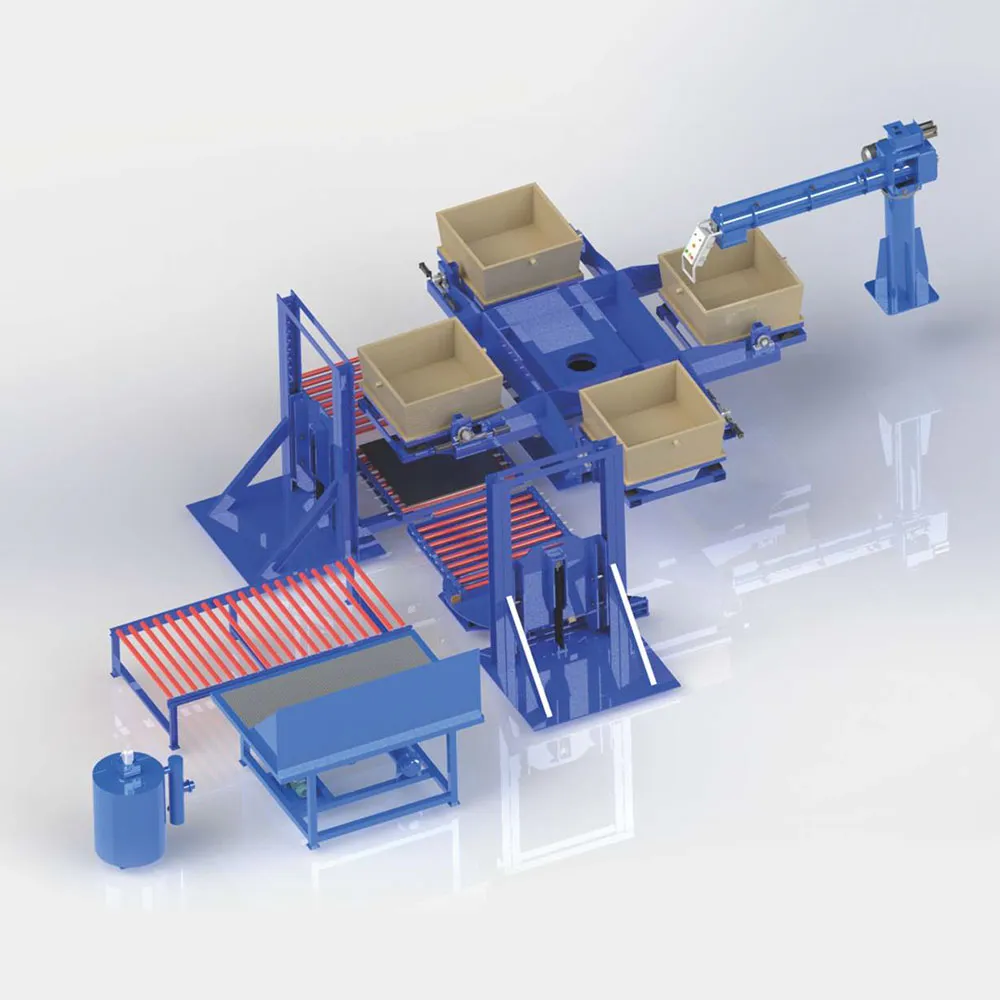
<h2><strong>Sand Molding Machine</strong></h2><p>A <strong>sand molding machine</strong> is the core production unit of any <strong>foundry sand mold casting line</strong>. It compacts prepared sand — typically a <strong>green sand mold </strong>mix of silica sand, bentonite clay, water, and additives — into a mold box, forming the cavity into which molten metal is poured. <a href="https://www.tes-san.com.tr/tr"><strong>TES-SAN</strong></a> designs and <strong>manufactures foundry sand molding machines</strong> built for repeatable, high-volume sand mold production across iron, steel, and non-ferrous alloys.</p><p><strong>Sand mold quality </strong>is set at the machine. Compaction pressure, pattern draw speed, and sand distribution uniformity determine the surface finish, dimensional accuracy, and green strength of every sand casting mold produced. <strong>TES-SAN foundry sand molding machines</strong> are engineered to hold these parameters constant across full production shifts — eliminating the variability that drives up scrap rates in high-volume <strong>sand mold casting</strong> operations.</p><p><strong>TES-SAN</strong> is among the <strong>sand casting manufacturers in Turkiye</strong> that deliver complete sand mold systems — not individual machines in isolation, but fully integrated casting lines where the <strong>foundry sand molding machine</strong> is specified in direct relation to the upstream sand preparation unit and downstream shakeout and recovery equipment. From <strong>green sand molding machine configurations</strong> for commodity iron casting to systems adapted for stainless steel sand casting, TES-SAN builds to the foundry's actual production data.</p><p> </p><h3><strong>Sand Molding Machine Types</strong></h3><p><strong>• </strong>High-pressure green sand molding machine (single and dual station)</p><p><strong>• </strong>Jolt-squeeze sand molding machine</p><p><strong>• </strong>Vacuum process (V-process) sand mold machine</p><p><strong>• </strong>Resin sand molding machine for stainless steel sand casting</p><p><strong>• </strong>Automated sand mold systems with integrated dosing and transfer</p><p> </p><h3><strong>Key Selection Parameters</strong></h3><p><strong>• </strong>Molds per hour and mold box dimensions</p><p><strong>• </strong>Sand type: green sand mold or chemically bonded sand</p><p><strong>• </strong>Compaction method: high-pressure, jolt, or vacuum</p><p><strong>• </strong>Alloy type: gray iron, ductile iron, stainless steel sand casting, aluminum</p><p><strong>• </strong>Automation level and integration with existing sand mold systems</p><p> </p><h2><strong>Frequently Asked Questions (FAQ)</strong></h2><h2> </h2><figure class="table"><table><tbody><tr><td><h3><strong>What is a foundry sand molding machine?</strong></h3></td></tr><tr><td>A <strong>foundry sand molding machine</strong> is equipment that forms sand casting molds by compacting prepared sand around a pattern under controlled pressure. The resulting sand mold is used to cast metal parts. <strong>TES-SAN manufactures foundry sand molding machines</strong> for both green sand mold and resin sand applications, integrated into complete sand mold systems.</td></tr></tbody></table></figure><p> </p><figure class="table"><table><tbody><tr><td><h3><strong>What is the difference between a green sand molding machine and a resin sand machine?</strong></h3></td></tr><tr><td>A <strong>green sand molding machine</strong> processes a bentonite clay and water-bonded sand mix; it offers fast cycle times and low consumable cost, making it the standard choice for high-volume <strong>sand mold casting</strong>. A resin <strong>sand molding machine</strong> uses chemical binders for higher dimensional accuracy — required for <strong>stainless steel sand casting</strong> and complex thin-wall geometries. TES-SAN supplies both machine types.</td></tr></tbody></table></figure><p> </p><figure class="table"><table><tbody><tr><td><h3><strong>How does a sand molding machine affect sand casting mold quality?</strong></h3></td></tr><tr><td>The <strong>sand molding machine</strong> determines compaction uniformity, mold hardness, and surface resolution. Inconsistent compaction produces soft spots in the sand casting mold, leading to metal penetration defects, dimensional deviation, and elevated scrap rates. <strong>TES-SAN foundry sand molding machines</strong> maintain compaction parameters within tight tolerances across every production cycle.</td></tr></tbody></table></figure><p> </p><figure class="table"><table><tbody><tr><td><h3><strong>Which sand casting manufacturers offer complete sand mold systems?</strong></h3></td></tr><tr><td>TES-SAN delivers complete <strong>sand mold systems</strong> — <strong>foundry sand molding machine</strong>, sand preparation unit, dosing system, mold transfer conveyor, shakeout, and sand recovery — under a single turnkey contract. This eliminates the integration risk that arises when combining equipment from multiple sand casting manufacturers.</td></tr></tbody></table></figure><p> </p><figure class="table"><table><tbody><tr><td><h3><strong>Can TES-SAN sand molding machines handle stainless steel sand casting?</strong></h3></td></tr><tr><td>Yes. Stainless steel sand casting requires chemically bonded sand molds (resin or sodium silicate) with high thermal stability and controlled permeability. TES-SAN specifies the correct sand molding machine type, sand mix, and mold coating for stainless steel sand casting applications, ensuring dimensional integrity at pouring temperatures above 1,550°C.</td></tr></tbody></table></figure><p> </p><h3><strong>People Also Ask (PAA)</strong></h3><h3> </h3><h4><strong>What sand mold systems are used in high-volume foundries?</strong></h4><p>High-volume foundries use automated green sand molding machines integrated with closed-loop <strong>sand mold systems</strong>: continuous sand preparation, automatic dosing, mold transfer conveyors, and sand recovery loops. Cycle rates of 60–200 molds per hour are standard. TES-SAN designs and installs these complete sand mold systems for automotive, agricultural machinery, and industrial casting foundries.</p><p> </p><h4><strong>How is sand casting mold strength measured and controlled?</strong></h4><p><strong>Sand casting mold </strong>strength is measured by green compressive strength (GCS, in kPa) and hardness (Shore hardness scale). TES-SAN sand mold systems include automatic dosing units that control bentonite clay and moisture additions in real time — maintaining GCS within the 70–150 kPa range required for consistent sand casting mold performance and low scrap rates.</p><p> </p><h4><strong>What distinguishes TES-SAN from other sand casting manufacturers?</strong></h4><p>TES-SAN combines in-house <strong>foundry sand molding machine manufacturing </strong>with complete sand mold systems integration — a capability that most sand casting manufacturers in Turkey do not offer under a single contract. Domestic stock availability, engineering-led project delivery, and structured post-commissioning support set TES-SAN apart in both local and export markets.</p><p> </p>

TES-SAN FAST MENU
EN
Başak Mah. Canköy Sk. No:12/A Karatay/Konya
+90 (332) 237 55 35
bilgi@tes-san.com.tr